
Blog
Sweet corn
SWEET CORN SEED
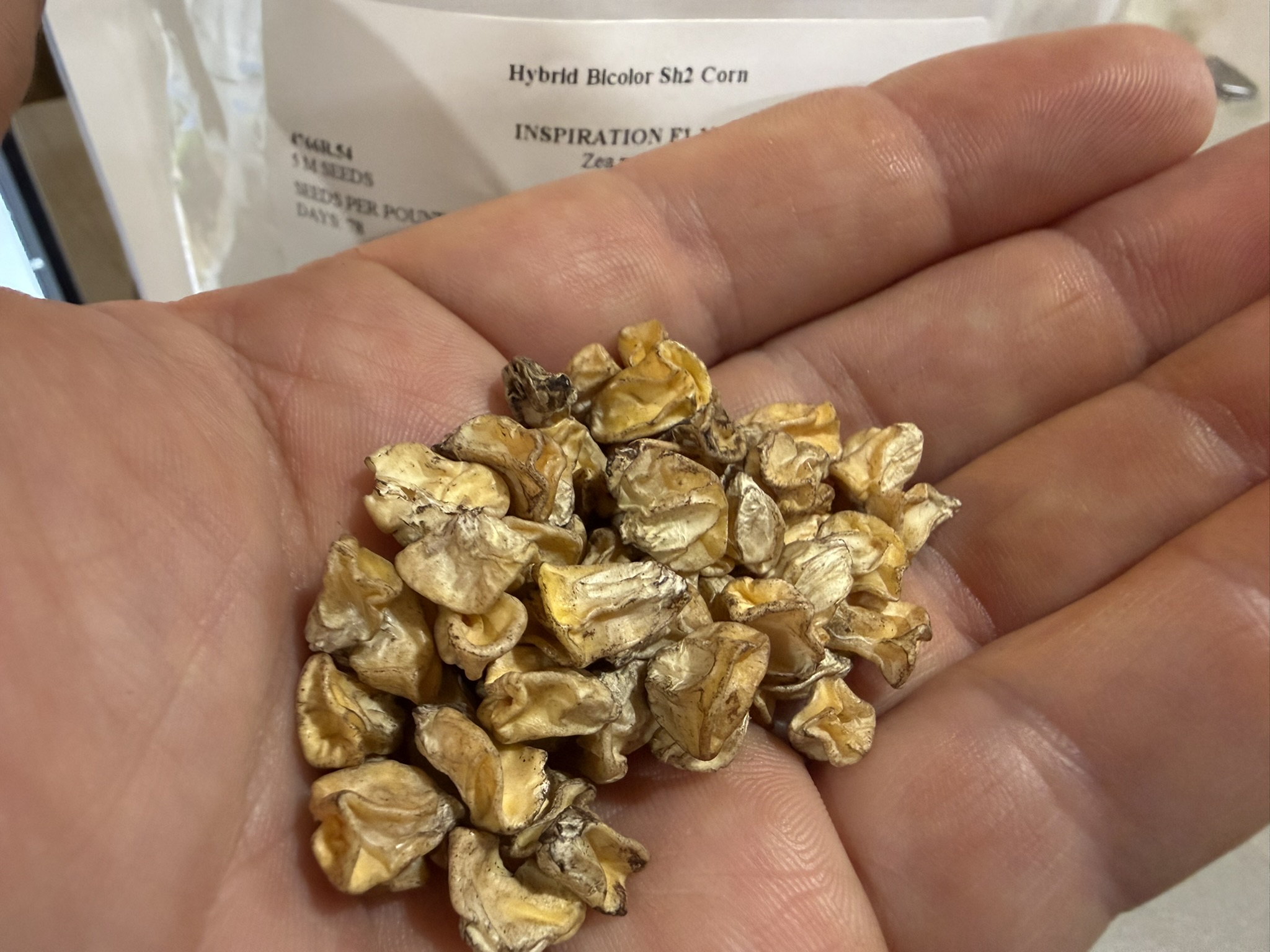
INSPIRATION Super Sweet Sh2 Bi-color Seed
SWEET CORN? YES, PLEASE!
What could taste more like summer than fresh sweet corn? You would think that an crop as iconic as sweet corn would be easy to grow. If you look at modern commercial farming, it certainly seems that way. Today’s commercial varieties are triple-stacked, fungicide-impregnated, Bt-bioengineered, and transgenically modified to be herbicide-resistant—making a strong argument for the “ease” of growing this crop.
Organics, however, take us back to the basics. And when it comes to eating, basic is usually a good approach. Because we don’t rely on chemical shortcuts, we carefully choose varieties bred to handle the natural challenges of an organic system. We look for seeds with quick germination to overcome cool soil temperatures and outrun the soil insects attracted to high-sugar kernels. We choose plants with vigorous root systems to scavenge for nutrients, since we don’t use highly soluble conventional fertilizers. Finally, we look for a tight husk that naturally protects the tender ears from bird pecks, insects, and all the other critters trying to steal a snack.
Growing organic sweet corn means constantly balancing on the edge of failure, yet we persist. This season, just as we were about to direct-seed our first crop, the rain set in. We waited, hoping for a brief window of dry weather to get the tractors into the field. But when the forecast showed another solid week of rain, we pivoted—seeding hundreds of trays in the greenhouse to transplant later. It is no small task to hand-plant several hundred flats of sweet corn, but what else is a farmer to do while it rains?
This week, we finally got those transplants into the field. It’s a little later than we had hoped, but they are officially on their way. We selected a few varieties with staggered maturity dates to spread out the harvest, and we are direct-seeding another round in the field this week to keep the supply coming as long as possible. With any luck, you’ll see these beautiful ears in your CSA shares and at the farmers’ market come August.
And when you find a worm in the tip? Just let it be a friendly reminder: if the bugs can eat it and live, it’s probably a whole lot healthier for you, too.
